Meanderings

Stalking trout with dry flies. Floating, wading, and camping along the rivers. Idaho, Montana, and Wyoming. Winter trips to Mexico.


Jun 15, 2021

Ranch Open

But not much at Millionaires this morning other than the two pigs I hooked.  They're different down there.  No bugs though.  Green Drakes at Osborne mid-morning, but hardly any fish on 'em.  Last Chance is fishing the best of the places I've been.  Pissed away 5 big eats at the Log Jam yesterday, as I had it to myself.  Big winds the last couple of days after mid-morning.  Still HOT in the afternoons-high 80's.  Not a cloud to be seen.


Really liking it on the Log Jam flat


Lipless Wonder


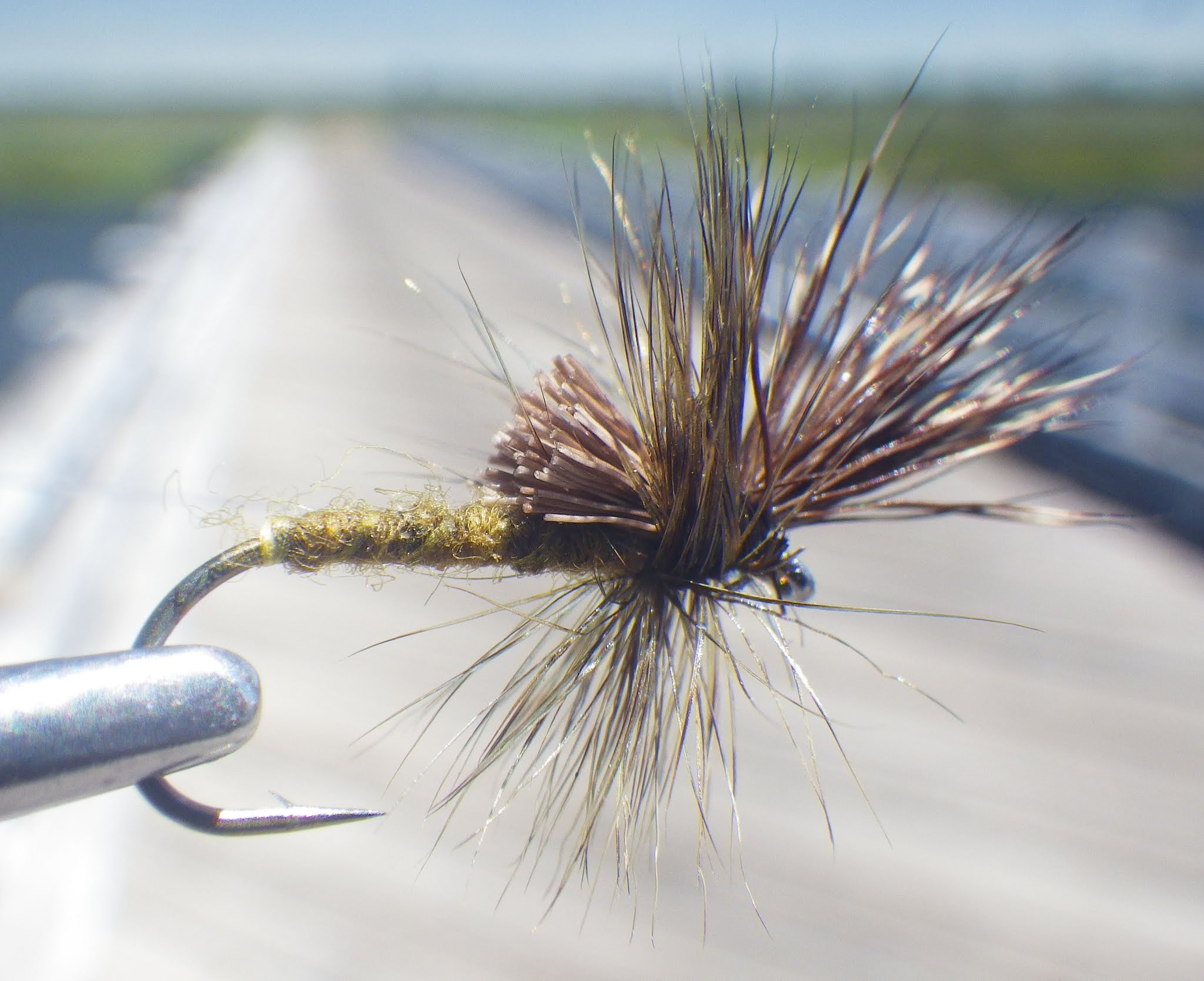
Partridge Caddis

Evening caddis blizzard-Last Chance


Jun 12, 2021

Last Chance Low

Knee high 'bout everywhere.  Yee Haw!  It sure as hell makes a difference.  The "catastrophic" drought year I've been waiting for is here.  Looks like I'm going to get some record-breaking heat with it soon, and I could do without that, but I'm all in on the low water, at least for now.  Forecast says 101 in Craig in a couple days.  Pass.

Caddis and PMD's are on the menu here.  Best I've seen this stretch in quite a few years.  Some nice fish too, not just dinks.  Crowded, but fish up literally everywhere.  Float it to 'em, and they eat it. 

A good start to what will probably be a too-hot June, but nevertheless a perfect morning going into a windy mid-70's afternoon.  Fished 'till I was wobbly, light headed, shoulder was shot, and the wind came up.  I need to have spring conditioning before getting into this!  The shoulder was hurting a week ago though, so I hope it holds up.  Not sure how, probably lifting stupid 40lb. lake trout.  My left-handed reach cast isn't so pretty, so bring on the anti-inflammatories.  

Wind was howling at the little spring creek in Wyoming on the way over, so missed that one this time.

Partridge and Hare


Partridge and Peacock


CDC and Hare


Lotsa Hare and Partridge


Evening Caddis in the House


Feb 17, 2021

Paradise

The difference between a fairy tale and a fish story, "Once upon a time," and "you ain't gonna believe this shit."  

The trip began on a familiar bank, where the water was low and the fish were happy.  Five for five on Gurglers when we moved.  We knew we would never keep that up, but that was our sign.  Seven days of mostly calm to gentle breezes. Low morning tides, both a help and a hinderance, but mostly a help once we got to the grounds.  More sun than clouds most days, and not a drop of rain.  The fish were outside the mangroves in droves, a long boat ride from any sign of civilization.  Sometimes stronger winds pushed us into creek mouths for a few hours, but we caught multiple fish in those every time.  It was the most consistent week I've ever had in Campeche.  

The typical morning started out with our guide Juan putting us right where we needed to be.  There were flashes of silver, the sound of the textured lines shooting through the guides, Juan's excitement, and the rattling of gills after every blow up.  It frequently went something like this.  

"There's a bunch of tarpon coming.  Too far, hundred meters.  Wait.  You see?  School!"  "OK, cast eleven, 20 meters, you see?"  "Ya ya, good cast, strip, strip.  He's coming, he's coming.  Got it!  Oh, geeze.  No pull on the rod. Pull on the line!  Cast again, cast again!  Now.  More far, two more meters.  More right, more right.  No step on the line."  Geeze."

Never a dull moment with Juan, he still has the full enthusiasm he had 10 years ago once we get on the fish and its show time.

"Back cast, back cast, two o'clock, 20 meters.  Oh, big tarpon!  He's coming, he's coming!  Got it!"

We'd get it right often enough, and it helped that we were often surrounded.  Blow a cast or spook some fish, and there were more within range or coming.   Sometimes, we just got it right on a single or pair that were sitting ducks.  The babies we came for, 5-15 lbs, were near the mangroves.  ON the outside grass flats were the "juveniles" of 15-30 pounds on this trip.  We spent most of the time on those.

There were enough fish offshore for both of us to cast together, one from the bow and one from the middle of the skiff.  We'd alternate the timing of our casts, each waiting for the other to start stripping before making our own cast.  The bow caster would hook up, we'd trade places with the fish running and jumping, and then double up.  Beautifully orchestrated, if I might say.  We had doubles every day. 

Surface fishing worked every morning.  White, yellow, and black, all with some red and/or some flash, worked equally well.  It didn't matter too much.  We jumped 30+ fish daily.  Juan apparently counted 70-something "landed" at the boat.  He does that, I don't, but it sounds in the ballpark.  Nobody could have really kept count when we were on 'em and it was mayhem.  You wouldn't have believed this shit!


Floater, slow sinker, and faster sinker.


When the wind would come up and make visibility harder, Juan would pole/drift from yellow spot to yellow spot, clearings on the bottom with no sea grass.  The fish were easy to see, as was the direction they were facing. We spent several afternoons getting ate on every light spot, for hours.  


Typical of the fish in the mangroves.  Fun size.

Bride of the Sea statue.


Wind and Tides

The great Stu Apte wrote a book about some of his half-century of flats fishing called Of Wind and Tides.  That title continually ran though my head as both of those vital variables set up perfectly for an entire morning and into the afternoon.  Light wind and low tides.

I'm not sure where I first heard the term "fantasy fishing."  Probably in the early 80's guiding in Alaska or something.  I've used it for 35 years, but rarely is there actually such a thing.  It doesn't mean really good, great, amazing, fantastic, or any such lesser description.  It really means stuff dreams are made of.  What we think of when we think of paradise, perfection, wouldn't change a thing.  What we fantasize about.  I rarely see it, but it happens every year or two.  Usually around a hatch, for trout.  Sometimes for a few hours down south, on a flat.

This time it was day 5 of a 7 day trip last week.  We were completely alone, somewhere along the Yucatan Peninsula a couple hours from any sort of civilization.  There was a slight breeze barely moving the surface of the water, just enough to easily see any target near or far, yet assist us into great double-hauls to 50-70 feet.  Hero casts.  There were close fish too. Light clouds covered the sky to help conceal our presence and mask shitty fish-spooking casts.  The warm sun was filtered just enough to prevent overheating in the 80 degree air and shield any bright glares.

The morning low tide ensured the fish were looking up from the 2-4 feet of clear water they were basking in.  We could see them all, and they could see anything on the surface and take a closer look.  They rolled, "finned" slowly on the surface, and just laid up motionless hoping a Gurgler would come blurping by.  We obliged. Our guide Juan had us in the right spot for it of course, well away from the everyday fishing grounds.  

This fantasy happens on the occasional morning with similar conditions, but not all day! One stop maybe.  This time though, it went on and on, and the realization set in after a few hours that we were right in the middle of the dream.  Perfect wind and tides, surrounded by the perfect number and size of 15-30 pound "greatest sportfish on earth."  And they wanted to eat.  Fantasy Fishing. 


Dry, wet, and deeper.  Today it was the dry.


Fish came after it!  I don't know how the head is tied.


Nov 2, 2020

Spawning browns and onion fields

The huge "bucknasty" browns are all on the gravel beds doing their thing.  The 14" and under juveniles are eating blue-wings in the hatch riffles.  Every shallow riffle had big spawners doing their thing.  Little guys were rising all afternoon right up through sunset.  Water super-low at 30cfs.

Spawners loaded up above this hatch riffle

Full of rising fish

All about this size

Early on

Of course

Couldn't keep 'em off of this one

Another riffle into a pool loaded with risers

30 CFS.  There was one October that was magic at this flow
This flat was full of rising fish on the drive out


Fading light.  The last image. Seems appropriate.  Fading.  The season.  

One disturbing observation.  A lot of the big browns had white fungus on their bodies.  I also saw a couple dead ones, and some dead carp, both covered with the fungus.    Apparently it happens.  I didn't see it in autumns past.  This is from the Idaho Statesman this past January:

Local anglers are concerned about an unusually high number of dead fish in the Owyhee River this winter. The fish are white, making them easy to spot as you look across the river.

I spoke with Dave Banks, a district fish biologist who manages the Owyhee River for the Oregon Department of Fish and Wildlife. Banks and his colleagues have identified the culprit — a water mold called Saprolegnia.

00:03/00:15SKIP AD

“This mold is something that’s always in the water,” Banks said. “But when fish become stressed and get cuts and scrapes during the spawning season, they become more susceptible to it. We do see a few fish die from it every year, but this year is the most I’ve seen.”

Unfortunately, the dead fish are large, adult brown trout — fish that make the Owyhee a trophy trout stream and attract anglers from across our region. Browns are nearing the end of their spawning cycle, which means fish are more tired and stressed than usual. Spawning also causes openings in the skin — females scrape their bodies against the river bottom while building nests, and males aggressively nip at their mates and each other with sharp teeth — where the mold can cause its deadly infection.

There is a silver lining, though. The mold isn’t affecting juvenile fish, which is good news for future populations. Rainbow trout haven’t been impacted, either — they are sterile in the Owyhee, so spawning injuries aren’t a concern.

“We don’t anticipate this will have a major impact on the fishery,” Banks said. “There are still lots of healthy fish, and it’s not affecting younger fish that will fill in the adult population going forward.”

There’s not much anglers can do for now. Banks said Saprolegnia doesn’t have any known impacts on humans, but since browns are catch-and-release only, harvesting infected fish isn’t an option anyway.

All in all, it’s a bummer, but it looks like this fish kill shouldn’t be too harmful in the long run.

Nov 1, 2020

Day Three

And I'm out.  The wind was howling when I arrived this morning.  Not much early love on the leech, and any bug on the water would have been blown to Boise.  After fishing the Indian Rock pool from the far side and wading back across, I went to climb up to the road and noticed a bunch of noses in a scum hole.  I hate scum holes, but I stopped to look.  They looked like dinks, but one on the bank side had a decent sized tail.  I hate scum holes, and this one was also covered in leaves.  It was a mess. 

I clipped off the leech, clipped back the tippet to about 15 inches so I could maybe cast it into the wind, and tied on a black Adams that I might be able to see.  It wasn't easy, but I got some eats.  They weren't dinks!  They only rose from under the thickest leaves/scum.  How they ever saw my fly is a wonder to me, but they did.  What they were eating remains a mystery too.  

That was about the day.  I got a few fish from the top of the riffle at the head of the run on the way out.  The wind died down completely by mid afternoon, and I could see some caddis and BWO's on the water, but didn't see any fish on 'em except for a random one-timer here and there.  Strange.

November 1, and I'm still fishing in warm sunshine!  Might as well go check the 30 cfs trickling Owyhee tomorrow.  I'm as close as I've been in a year, and likely as close as I will be for another year.  

Yuck.  But there were a bunch in there.

Not dinks

Plopping it down

Messy

Could see a bunch of nice ones I didn't catch


Lots of bugs up top late afternoon.  No risers.